Planners pitch $1B proposal of ex-military site in Stratford
Originally published by HARTFORD COURANT. Reporting By Don Stacom - October 5, 2026
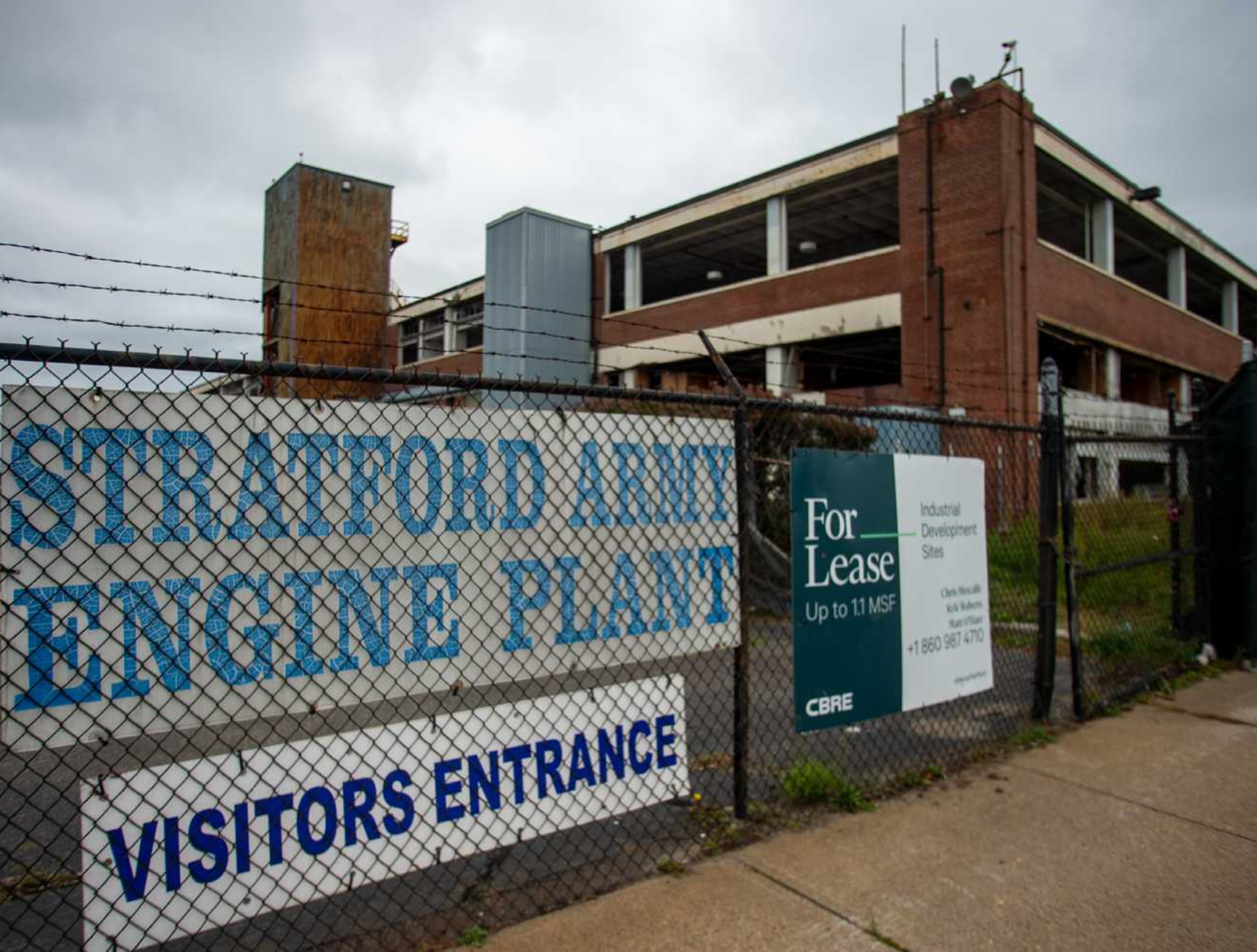
Demolition continues at the former Stratford Army Engine Plant in Stratford as part of the Point Stratford Renewal project on Wednesday. AARON FLAUM/HARTFORD COURANT PHOTOS
New mayor is pushing a redevelopment that includes apartments, retail, trails and hotel.
Nearly three decades after the U.S. Army walked away from a massive waterfront property in Stratford, planners this fall are working out the potential mix of apartments, condos, retail space, public parks and trails for a proposed $1 billion redevelopment.
Propelled by an eager town government and the Lamont administration’s hunger for new housing, the Point Stratford initiative has advanced further this year than ever since the former Army Engine Plant shut down in 1998.
A years-long, $74 million environmental cleanup of the property’s 20-acre tidal flats was completed this summer, and heavy equipment is now more than halfway through demolishing about 1.2 million square feet of factory buildings that once churned out tank engines, military seaplanes and helicopters.
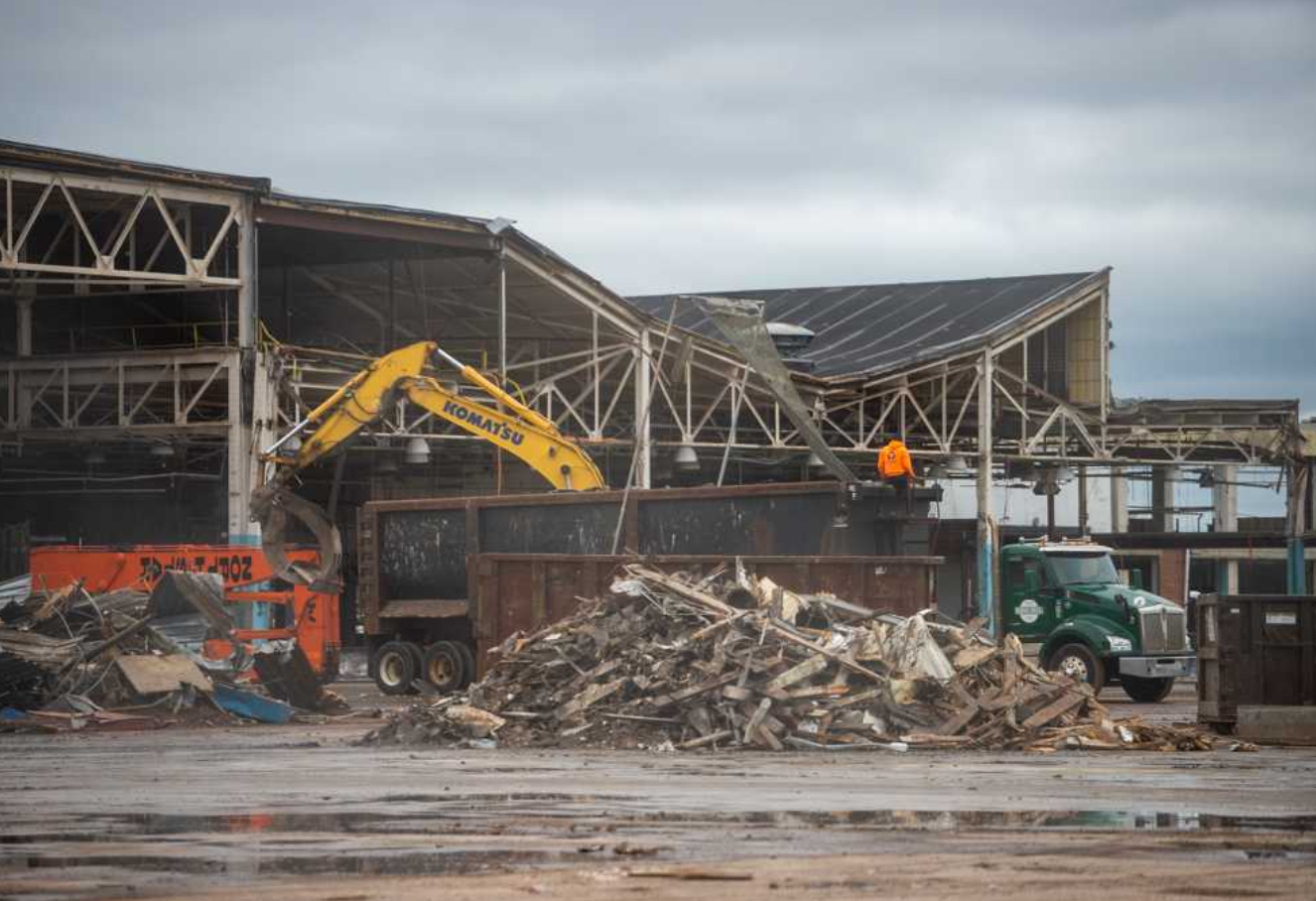
Demolition continues at the former Stratford Army Engine Plant in Stratford as part of the Point Stratford Renewal project on Wednesday.
But by far the biggest advance is in the design for the future. The development partnership that owns the 77-acre site was making plans to put up a 1.1 million square-foot distribution center, similar to the behemoths that surround Bradley International Airport.
But last winter, newly elected Mayor David Chess pitched a vastly more ambitious idea: a mixed-use project emphasizing a mile and a half of new public walkways along the Housatonic River, waterview residential buildings, restaurants and possibly a hotel.
“This is what I campaigned on. Building a warehouse on waterfront property would be a sin. What we can build is a beautiful seaside town with a lot of retail,” Chess told The Courant. “We can have biking and walking and all kinds of activities along the water, a park, a day dock, a hotel, a sports complex. We have the same landscape architects working on this who did the High Line in New York.”
In a recent Facebook message to residents, Chess proclaimed that the long-awaited redevelopment will be a major factor in shaping the town’s future.
“This project is truly a turning point for our community, and together we are going to revitalize Stratford for generations to come and enhance quality of life for everyone,” Chess wrote. “This is not just another project. This is a transformational project: a development that will put Stratford back on the map and make it a premier location.”
To advance the idea, Chess has to convince Point Stratford Renewal, the investment partnership that bought the land for $1 from the federal government in 2024. The Army had chosen Point Stratford Renewal as its preferred redeveloper 11 years earlier.
During last fall’s mayoral campaign, Chess took his case to PSR’s partners: Ted Lane, a former senior executive at the Trammel Crow international real estate development firm, and Jim Cabrera and his son, Peter Cabrera, both principals at Greenwich-based Eagle Ventures.
“We told him ‘We’re politically agnostic, but if you get elected give us a call and we’ll have lunch.’ And that’s what happened,” Jim Cabrera said.
“We told him this would be a heavy lift: We already had all our approvals for the warehouse, and the underlying zone for the property was industrial. We were heading down that path. In 2024, there were 14 tenants looking for more than 1 million square feet,” Cabrera said.
“But he was excited about housing on the waterfront. He said he’d get us the planning dollars if we did residential. And with residential, we’ve had a brownfields grant, DECD (Department of Economic and Community Development) money. The governor came to hear for presentation for 15 minutes and stayed for two and a half hours,” Cabrera said.
Chess, a physician and businessman before running for office, told PSR that a waterfront center of parkland, recreation spaces, housing, stores and restaurants would bene fit Stratford as well as the state, and stood to be more lucrative than a simple warehouse.
“We knew the planning costs would be significant, and I said I’d help find a way to pay for that and get further dollars for remediation,” Chess said. “A few weeks ago, we secured $2 million (from the state) to help with planning. We have a tentative $5 million for brownfields.”
He credits his town council and Stratford’s state legislative delegation for providing aid and is currently pursuing further state remediation grants. He is adamant that the investment will pay off.
PSR projects that over a 20-year-long buildout, Point Stratford will create more than 500 construction and related jobs, then ultimately generate 750 full-time, part-time and seasonal jobs in the stores, hotel, restaurants and residential buildings. It’s projecting $15 million in annual tax revenue to Stratford once everything is built.
“The last administration was going to put a warehouse there. Warehouses are empty calories, they don’t help us. That was a low-yielding opportunity. And the taxes we would get from a warehouse would be microscopic to what we’ll get from a development,” Chess said.
Consultants are preparing a master development plan to show just what would be built. Currently the expectation is that about 20% of the housing will be priced as “affordable,” but the size, architectural features and heights of the potential residential buildings are still being determined.
“We’re calling this a coastal community and we don’t want it to be a generic development that could be anywhere,” Jim Cabrera said. “There are unbelievable views to the south and the east after the third story.”
He’s emphasizing flexibility after a lesson in fast-changing market conditions during the Harbor Point project that he pioneered in Stamford 20 years ago.
Jim Cabrera, who grew up in Old Greenwich, led Stamford’s redevelopment of its then-shabby South End, an multibillion-dollar initiative that replaced abandoned and decaying industrial buildings with some of the most modern and expensive high-rise apartment towers in Connecticut. But the 2008 financial collapse tanked his company, Antares Investment Partners, which had to relinquish the project to Building and Land Technology before it was completed.
So Point Stratford Renewal is staying flexible about the exact mix of condos, rental townhouses and traditional apartments, as well as the amount and style of retail space and commercial space.
“The master plan we deliver by December will have the ability to do a lot of things,” he said.
A key to Harbor Point was adding walkways and paths to expand public access to the waterfront, and both Jim Cabrera and Cross see that concept as crucial to Point Stratford.
PSR’s consultants have held a series of community engagement meetings this summer, talking with about 1,000 residents. A survey also drew responses from about 1,000. The message that came through most clearly is that Stratford people wanted to get access to their waterfront; they’d been fenced out for decades, and the Stratford Greenway abruptly ends in the woods just yards north of the Army Engine Plant property.
Chess envisions extending the bikeway and building a boardwalk along the property’s entire waterfront. When the master development plan is put forward in December, it may also include a small museum to mark the property’s spot in aviation and military history.
The factory complex started in 1929 as the headquarters of Sikorsky Aviation Corp., and 10 years later Igor Sikorsky took the first flight of the VS-300 — the prototype of modern helicopters — from the property. Vought-Sikorsky Corp. produced the first Clippers that Pan Am used for its overseas routes, and built thousands of Corsair fighter plans during World War II.
“We want to honor that history. Doing what the town wants is pretty important,” Jim Cabrera said. “We also want to put in something that’s financially sustainable. There’s going to be flexibility to do whatever the market wants: Townhouses, flats for sale or for rent, some age-restricted housing.”